
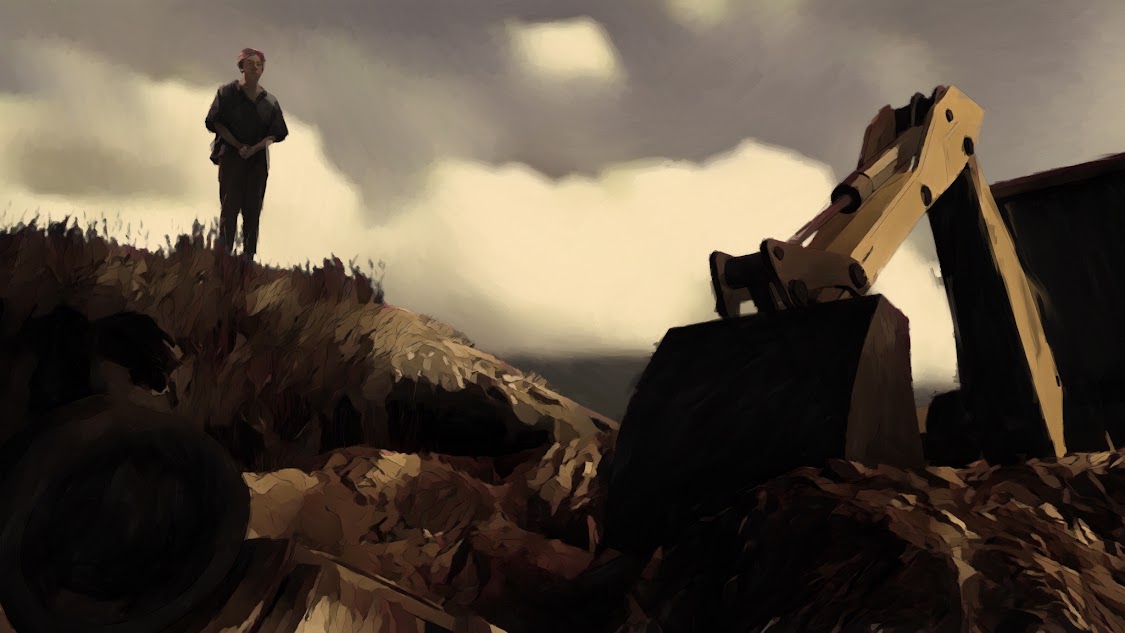
In an era of heavy-handed films where the social message outweighs everything else, it’s refreshing to come across something special like 58th (2026). The latest film by Carl Joseph Papa explores the impact of the Maguindanao Massacre on the family of the 58th victim and their fight for justice. Yet his approach avoids the usual pitfalls of documentaries dealing with such deep subject matter.
After using rotoscoped animation in The Missing (2023), his beautiful previous film, the filmmaker returns to the same technique to tell this story. 58th is just as imaginative, with the animation blurring the lines between reality and fiction while enhancing the beauty of the character’s resilience without making light of such a serious situation.
The creativity flows through every frame with clever touches, like seamless transitions that effortlessly blend each scene. But none of that would have been enough if its core was hollow. On the contrary, 58th burts with raw emotion, and Glaiza De Castro’s performance is key to making us feel like we are also part of that family.
Grief manifests itself differently from person to person, even when the people involved have experienced the same traumatic event. The hurt caused by a massacre extends far beyond its victims, affecting everyone who loved them, as well as people across the Philippines, where that massacre took place. Papa understands this very well, allowing 58th to become some form of catharsis that the characters were never able to experience in real life. More than that, the film refuses to wallow in misery, constantly remembering the affectionate moments that made that person who he was. That’s what matters most in the end: the good memories we carry with us.


